

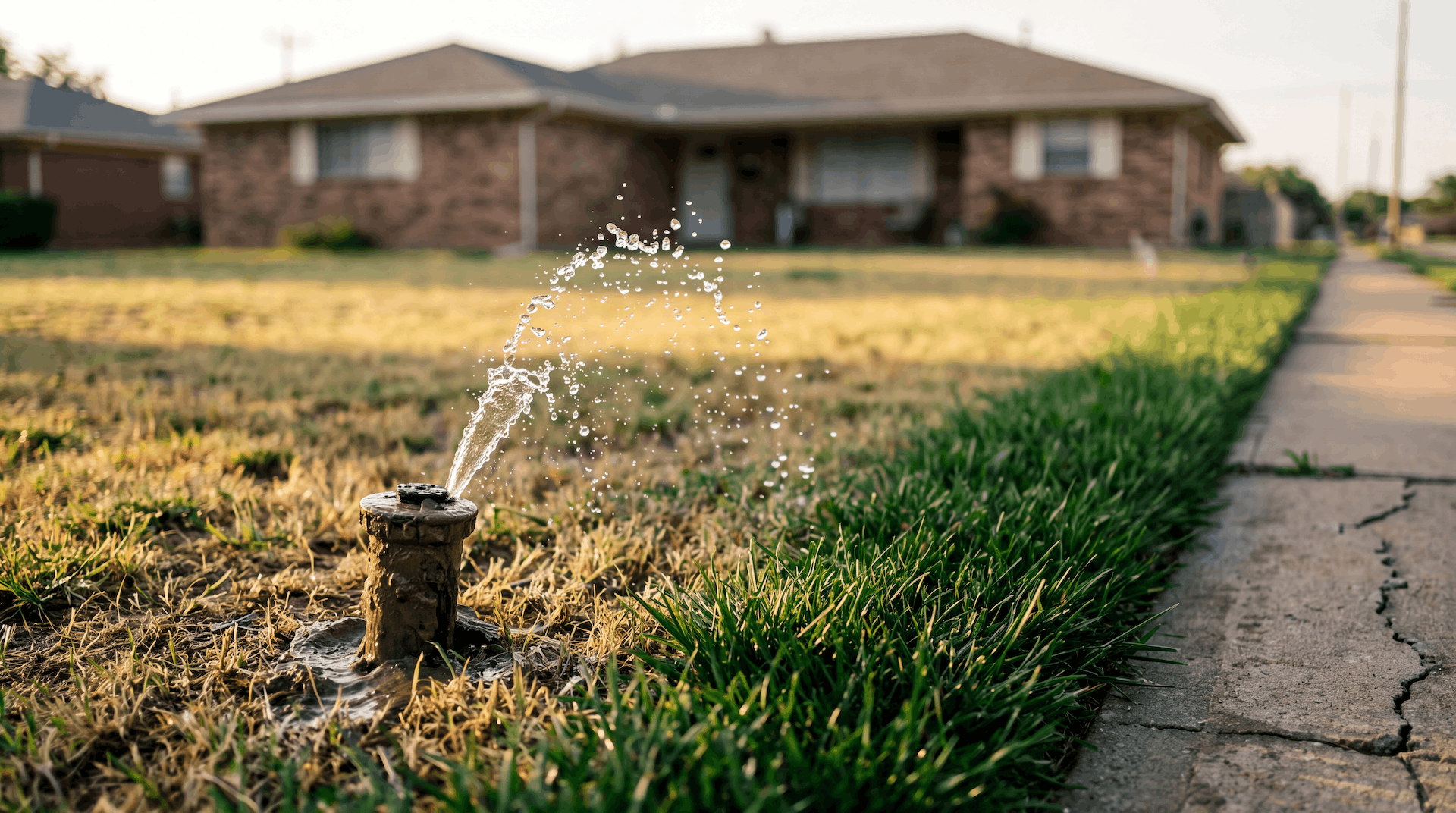
If your water bill jumped and nothing about your household changed, your sprinkler system is the first suspect. Underground irrigation leaks are among the most expensive water problems a North Texas homeowner can have, because they run invisibly, on a schedule, often in the early morning hours when nobody is watching. A single leaking zone can waste thousands of gallons per month before anyone notices.
Here are the seven signs we look for on sprinkler repair calls across the DFW metroplex.
1. A Water Bill That Climbed Without Explanation
This is the classic tell. If your bill rose 20 to 50 percent and your indoor usage hasn't changed, the increase is almost always outdoors. Pull your last three months of bills and compare gallons used, not dollars, since rates change seasonally in many DFW cities. A steady climb in gallons points to a leak that is getting worse.
2. One Patch of Grass Greener Than the Rest
A suspiciously lush, dark-green patch, especially near a sprinkler head or along a straight line between heads, usually means water is escaping underground and feeding that spot around the clock. In clay soil, leaks tend to surface slowly, so the grass gets the water before you ever see a puddle.
3. Soggy or Spongy Ground When It Hasn't Rained
Walk your yard a full day after the last watering cycle. If any area feels soft, spongy, or squishes underfoot, water is collecting there. In North Texas blackland clay, which drains slowly, persistent soggy spots almost always trace back to a cracked lateral line, a leaking valve, or a head that no longer seals.
4. Low Pressure in One Zone
If one zone's heads barely pop up or spray weakly while other zones run fine, pressure is escaping somewhere in that zone, typically through a cracked pipe or a fitting that separated as the soil shifted. DFW's expansive clay moves enough between wet and dry seasons to pull rigid PVC joints apart over time.
5. Water Running on the Sidewalk or Curb at Odd Hours
Water trickling along the curb when the system isn't scheduled to run points to a valve that isn't fully closing. A weeping valve leaks continuously, 24 hours a day, which makes it one of the most expensive small failures in an irrigation system.
6. Erosion, Sinkholes, or Exposed Soil Channels
Escaping water carves paths. If you notice small channels cut into beds, soil washing onto hardscape, or a depression forming in the lawn, pressurized water may be moving soil underground.
7. The Meter Test Fails
Here is a quick check anyone can run: turn off everything that uses water inside and outside the house, then watch your water meter. If the low-flow indicator keeps spinning, water is moving somewhere. Then shut off the irrigation system at its isolation valve and check again. If the movement stops, your leak is in the sprinkler system.
What to Do Next
Catching a leak early is the difference between replacing a fitting and re-trenching a zone. A professional diagnostic walks every zone, tests static and working pressure, and pinpoints the failure before any digging starts. If you're seeing any of these signs in Midlothian, Waxahachie, Cedar Hill, Mansfield, or anywhere in the DFW metroplex, our licensed irrigators can usually get you on the schedule the same week.
Learn more about our sprinkler repair services or request a free quote, or call us directly at 214-949-6474.